Old Houses Attracting Millennial Buyers

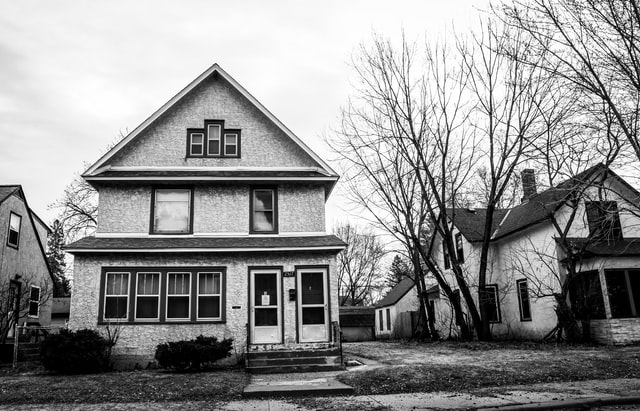
We’ve just talked about the Millennial generation’s impact on the luxury real estate market and their desire for updated, move-in ready homes (see: https://www.beachchatter.com/2021/02/11/millennial-preferences-reshaping-luxury-market/). It turns out there’s another type of home that Millennials are itching to buy, and it’s quite on the opposite side of the spectrum. They’re moving across the country to buy old, cheap houses in need of extensive renovation.

Not all Millennials have the income to enter the luxury market, so for those with budget constraints, the alternative is to expand the search radius. There are plenty of houses under $100,000 that are in need of some updating in historically less desirable areas. A Utah couple bought a Victorian-style 1885 house in Connecticut for $85,000. They’re expecting to spend about $100,000 to remodel it. This is still far below Utah’s median house price of about $575,000. It’s likely that this trend will continue, as work-from-home enables prospective buyers to look anywhere within the country. More expensive areas such as New York City have already had a significant exodus.

Photo by Glenn Hansen on Unsplash

More: https://www.reuters.com/article/amp/idUSKBN2AB1HO

Millennial Preferences Reshaping Luxury Market

There may be a surprising answer as to why younger generations have seen increased rates of living with their parents. Popular belief is that they’re either too lazy to get jobs or simply saddled with too much college debt. While lack of employment and exorbitant tuitions definitely play a role for some of them, Millennials are actually the largest group of homebuyers, so what’s true for some won’t be true of all of them. It appears some contingent of them have simply been biding their time, waiting for the perfect opportunity to skip past starter homes and enter straight into the luxury real estate market.

College may have brought with it a mountain of debt, but as a result, Millennials currently are the most educated group of buyers in the US and are earning more than any prior generation. They are also set to inherit more than prior generations did. It takes time, but they are able to save up money to buy a house. And not even just a house — the first homes of some Millennials are multi-million dollar residences. Of course, this is partly because rising prices have meant that more areas have multi-million dollar homes for sale. But another reason is Millennials’ wishlist items: move-in ready, good walk score, high-tech green features. These all add value to a home, making Millennials’ tastes — while not ostentatious — expensive.

Photo by Daniel Barnes on Unsplash

More: https://www.bloomberg.com/news/articles/2021-02-01/millennials-are-changing-the-luxury-real-estate-market

First-Time Homebuyers Can Afford More Than They Think

In a survey of 1000 people who either just bought their first home or were trying to, 68% were surprised by just how much they were able to afford — 47% pleasantly and 21% unpleasantly. It makes sense that first-time homebuyers would generally have a less refined sense of what they can afford, but in this case, there’s a reason for it. Much of it can be attributed to the sharp decline in 30-year mortgage rates, from 3.65% in March 2020 to 2.65% in January 2021, which was a record low. This allowed prospective buyers to afford more without stretching their budgets too much.

Even if you think you can’t afford your first house at all, like 44% of respondents, you may want to reconsider in the near future. Half of the successful buyers were able to save enough for a down payment in 3 years or less. There were various methods they used to save up, and didn’t use just one method. The most common were getting help from friends or family at 52%, setting aside a portion of their paycheck at 50%, cutting spending at 33%, and saving lump sum money, such as tax refunds, at 32%.

Nevertheless, with prices on the rise, recent buyers have still had to compromise to find something within their larger-than-expected budget. 21% expanded their search area to include less desirable, less expensive neighborhoods. 18% dropped some wish list items. 20% wanted to avoid compromising on their wish list, but ended up spending more than they initially hoped. Increased competition also meant that buyers didn’t get what they wanted immediately. 20% were outbid at least once and 20% made at least five offers.

Photo by Celyn Kang on Unsplash

More: https://news.move.com/2021-02-03-Affordability-Surprises-First-Time-Homebuyers-While-Parental-Assistance-Savings-and-Wishlist-Compromises-Prove-Common-Survey-Finds

Work-From-Home Could Help Some Young Adults Achieve Homeownership

One of the many effects of the pandemic was that a large segment of the population transitioned to work-from-home. In some cases, those were renters who had the fortune of being able to move back in with their families. Perhaps their rental home was closer to work, and the distance no longer mattered. Maybe they just wanted to be able to shelter in place with their family as opposed to alone. No matter the reason, this segment of the population suddenly is no longer worried about rent payments, yet still has a place to live and is still working. Depending on the prices in their area, this could be rather useful in saving towards a down payment on a house.

The national average of a down payment on a median-priced house is 5%, the US median rent for a one-bedroom is $1,533, and the average home price is $340,000. Given these numbers, it would take the average former renter approximately 11 months of not needing to pay rent to save up for a 5% down payment. Across the 20 largest metros in the US, the average is about 15 months. The numbers range from 11 months in Chicago for a median priced home of $327,000, to 22 months in Los Angeles at $999,000.

Of course, national averages don’t tell you everything. A down payment of less than 20% in California is going to result in increased mortgage premiums, so a 5% down payment isn’t ideal. It’s also unlikely that the entirety of the former rent payment is being put into savings. It’s true that a long-term work-from-home trend could be a boon for former renters who moved back in with family, but the effect is probably considerably lower than these statistics suggest.

Photo by Nikola Balic on Unsplash

More: https://news.move.com/2021-01-28-Moving-Home-Could-Help-Renters-Save-for-a-Down-Payment-in-Less-than-Two-Years

Pandemic Threw a Wrench in Retirement Plans

According to a recent survey from finance magazine Kiplinger and wealth management organization Personal Capital, over 40% of those saving for retirement are less confident in their savings now. The pandemic triggered a significant economic recession with the highest number of job losses since the Great Depression, reducing the ability to save and in many cases, forcing people to withdraw from savings.

33% of respondents took a distribution or loan from their retirement account. 58% of loans through the CARES Act borrowed between $50,000 and the maximum allowed of $100,000, and 33% of those who withdrew money took out $75,000 or more. A third of respondents also said they plan to work longer and delay their retirement, and some were forced to do the opposite and retire early without the ability to find work at their age. This could pose an issue, since retirees are quite reliant on Social Security. 20% of retirees use Social Security for at least 90% of their income, and 50% use it for over half their income.

The survey also only included people with at least $50,000 in their retirement savings. The problems may be worse for those without much savings, which could be a large segment of the population. In 2019, almost half of those in the US between the ages of 32 and 61 have no retirement savings at all. The majority of those with savings had less than $21,000. And remember that this was pre-pandemic — the recession only would have exacerbated this issue.

Photo by Jp Valery on Unsplash

More: https://www.businessinsider.com/majority-americans-withdraw-retirement-savings-2020-pandemic-survey-2021-1

What Can Landlords Deduct from a Security Deposit?

Whenever a tenant is moving out, they’re always expecting to get back their security deposit. But they may not get back all of it, as landlords are looking to deduct part of the security deposit to recoup as much as possible. While there are not very many laws regarding security deposit deductions, there are a few, and there are several guidelines.

Legally, a landlord has 21 days to mail the Security Deposit Refund letter to the tenant’s forwarding address, counting from the day the tenant returns the keys. If repairs won’t be complete within 21 days, the landlord still needs to provide estimated costs, and must provide the actual costs within 14 days of completion of the repairs. In nine cities in California, landlords must pay interest on security deposits, to be paid each year and at the end of tenancy. The rates vary each year and the payment deadline varies by city, so if you are a landlord, be sure to check with your local rent control board or city government if you live in one of these nine cities — Berkeley, East Palo Alto, Hayward, Los Angeles, San Francisco, Santa Cruz, Santa Monica, Watsonville, and West Hollywood.

The types of expenses that can be deducted are unpaid rent, cleaning, repairs, and restoring or replacing items specifically mentioned in the lease. Before and after pictures are important in determining whether the landlord can charge for cleaning. As for repairs, normal wear and tear cannot be deducted, but major damages can. If something needs to be replaced, replacement costs are usually calculated based on the item’s expected remaining life expectancy, not the full value.

Photo by Colin Watts on Unsplash

More: https://aoausa.com/security-deposit-refunds-what-can-i-deduct-by-melody-scott/

SB 91 Extends AB 3088 and Creates Additional Protections

The protections for tenants and homeowners under AB 3088 were set to expire a few days ago, on January 31, 2021. However, SB 91 extends these through June 30, 2021, giving tenants more time without fear of eviction as long as their application is proper and they pay at least 25% of their rent. SB 91 is not merely an extension of AB 3088, though. It also creates new tenant protections and establishes a rent relief program.

The rental assistance program is available regardless of citizenship status, but only for those with an income below 80% of area median income (AMI). The program prioritizes households below 50% AMI or who have been unemployed the full 90 days prior to applying. Assistance is given for rental arrears first, before new rent and utility arrears.

The new tenant protections mostly prevent landlords from attempting to squeeze money out of tenants in ways separate from the normal rent payments. Landlords won’t be able to apply the security deposit to debt, charge late fees, or factor in debt when determining rent prices. Landlords also can’t assign or sell debt until June 30, 2021, or at all if the tenant qualifies for the new rental assistance program. Landlords may not take legal action to recover debt until July 1, 2021, at which point they still need to provide documentation of good faith efforts to cooperate with qualifying tenants. Courts are allowed to limit attorney’s fees for rental debt cases, and if the landlord refuses to participate in the rental assistance program, the court can also reduce the amount of damages.

Photo by Luke van Zyl on Unsplash

FHA Updates Loan Limits for 2021

The FHA has increased the loan limits for every category in 2021, a boon to prospective homebuyers who may have been negatively impacted by the recession that came with the COVID-19 pandemic. The two primary categories of loan limits are low-cost area and high-cost area, and each category has separate limits for SFRs, duplexes, triplexes, and quadplexes.

For low-cost areas, your loan limits have gone up approximately between $25,000 and $47,000. The SFR limit went from $331,760 in 2020 to $356,362 in 2021. The duplex limit went from $424,800 to $456,275, triplex $513,450 to $551,500, and quadplex $638,100 to $685,400. High-cost areas saw an increase between about $57,000 and $110,000. For SFRs, it went from $765,600 to $822,375, duplexes from $980,325 to $1,053,000, triplexes $1,184,925 to $1,272,750, and quadplexes $1,472,550 to $1,581,750.

In order to qualify for any FHA loan, the requirements you’ll need to meet include credit score, down payment amount, and debt-to-income ratio. The credit score minimum is 500. If your credit score is below 580, you need a minimum down payment of 10% of the purchase price, otherwise the minimum down payment is 3.5% of purchase price. The maximum debt-to-income ratio for all debt is 43%, and 31% front-end. In addition, you must have an FHA appraisal and home inspection, cannot purchase and resell the home within 90 days, and must use the loan for a primary residence.

Photo by Joshua Hoehne on Unsplash

More: https://www.foxbusiness.com/money/new-fha-loan-limits-2021

Homeowners Delaying Home Repairs During Lockdowns

If you’re going to be stuck at home, you probably want your home to be in good condition, or at least a safe condition. Unfortunately, many people aren’t able to get necessary home repairs done, and 70% of people have delayed them while the pandemic is still going on. 47% of those who have delayed repairs say it’s because the economic situation has landed them in debt. It’s not clear why the other 53% are delaying repairs, but we can speculate that they either want to avoid going into debt or don’t want contractors in their houses in the middle of a pandemic.

It’s a bigger issue than it may seem, since 31.7% of respondents admitted to even delaying critical repairs, and 21.7% say the deferment is potentially dangerous. Nevertheless, 59% of respondents considered this an acceptable risk given the circumstances. In the context of financial struggles, the most commonly deferred maintenance is for broken appliances, water damage, electrical issues, and roof repair. Some maintenance, such as water damage, are particularly dangerous to delay since they will only get worse and more expensive over time.

As far as repairs that were done, just over half of the funds needed to complete the repairs were drawn from savings accounts. That doesn’t necessarily mean they paid for it only with savings, though. Many people evidently drew from more than source of funds, given that the totals from other categories sum up to much more than 100%. The largest of these other categories were credit card at 36.7% and checking account at 31.3%.

Photo by Mitchell Luo on Unsplash

More: https://www.searshomeservices.com/blog/keeping-up-with-home-repairs-during-a-pandemic

2020 Breaks Records for Sight-Unseen Offers

It’s generally a good idea to see a property in person before purchasing it. Even if you’re planning on flipping or bulldozing it, you may want to take a look at the condition of the structure or land the property is on. With advancements in virtual tour technology, they’ve gotten more popular, but until 2020 they didn’t serve as a full replacement for an in-person tour. However, with the lockdowns, almost two-thirds of homebuyers were content with just a virtual tour before submitting an offer.

Redfin conducted a survey asking respondents whether they, at some point during their most recent search, made an offer on a property they had not seen in person. In December 2020, the number of yes responses was 63%. It was steadily progressing all year, and was at 45% at the year’s midpoint. Their 2019 survey was conducted in November, where it was only 32%, which was still not the lowest that year.

Besides lockdowns making in-person tours difficult, there are a couple other reasons for the upwards surge. One is related, and that is that the work-from-home experiment is becoming more permanent, which allows for cross-country moves without losing one’s job. The other reason is improvements in virtual touring technology and methods. 3D walkthroughs and image slideshows only tell you what the seller wants you to know. With advancements in and increased popularity of video conferencing, your agent can give you a complete video tour and show off those details that are usually missed in virtual tours.

Photo by William Bayreuther on Unsplash

More: https://www.redfin.com/news/remote-homebuying-surges-to-new-high/

How the Pandemic Has Reshaped Office Design

During the lockdowns, businesses had an excuse to try out work-from-home models and see how well it works. Is it better than office spaces? Worse? Just different? Offices and and work-from-home models both have their advantages and disadvantages, and the experience will be different for different people. By surveying employees who had a chance to work from home, some companies are rethinking whether they want an office space at all. Those who are keeping their offices are also learning what they can do to make the office a better place to work.

The main advantage of office space has frequently been assumed to be that workers are more productive without the distractions of home. While this is true for some people, especially those with young kids, by and large productivity has actually been higher using a work-from-home model. Some of this can be attributed to employees specifically focusing on work because they don’t want to appear unproductive, but for the company, this achieves the same result.

According to employees at advertising and marketing firm R/GA, the purpose of the office was not productivity. It’s human connection and collaboration. Two of the biggest disadvantages they saw while working from home is that they missed seeing their coworkers and weren’t able to coordinate with them efficiently. Many of them wanted to keep working from home, but still be able to access the office a few days a week to meet with coworkers. R/GA saw that as a pointer for how they could change the office experience to prioritize it being a collaborative space. Individual desks and cubicles serve little purpose here — what’s needed is more informal meeting rooms. There are larger conference rooms, but those don’t allow for smaller teams to work together without interruptions from other groups coming and going.

Photo by Amy Hirschi on Unsplash

More: https://www.newyorker.com/magazine/2021/02/01/has-the-pandemic-transformed-the-office-forever

Prop 19’s New Laws for Property Tax Exemption

Proposition 19 has now passed in California, and with it brought changes to how property tax is reassessed for some purchases, effective April 1, 2021. The new law replaces Prop 60 and Prop 90, affecting replacement property by homeowners who are over 55, severely disabled, or whose home has been substantially damaged by wildfires or natural disaster. It allows the homeowners to transfer their original home’s taxable value to a replacement property. It’s unclear as of yet how properties sold prior to April 1 will be treated if the replacement purchase occurs after this date. Regardless, the replacement purchase must occur within two years of the original property’s sale.

Under prior law, this type of reassessment could only be applied if the purchase was made in the same county as the prior residence or in specific counties. Under new law, it applies throughout California. Additionally, prior law required the replacement home to have equal or lesser value than the original home. Prop 19 has provisions for an adjusted rate in a circumstance where the value is greater. The adjusted rate is calculated as the original home’s taxable value plus the difference between the replacement home’s purchase price and the original home’s sale price. This reassessment can be applied up to three times, or indefinitely any time that it is applied under the provisions for substantial property damage.

With Prop 19 also came a change to intergenerational transfers. Previously, a child or grandchild could inherit a property with no change to the property tax amount. Effective February 16, 2021, that exemption from reassessment applies only while the heir is using the property as their primary residence, and only if the heir claims a homeowner’s or disabled veteran’s exemption within one year of the transfer. The new law also requires that the property continue to be used as the child or grandchild’s primary residence. Once the property is no longer their primary residence, the property will be reassessed.

If the value of the inherited property is more than one million dollars greater than the original purchase value, there will be a partial reassessment. Essentially, the heir is allowed to use the original purchase value, plus one million dollars as the baseline property value. Above that, normal property taxes are applied.

In addition, family farms are now also included in properties that can retain their taxable value when transferred. Farms are not subject to the primary residence test, however all other qualifications and exemptions apply.

Photo by Markus Winkler on Unsplash

Manufactured vs Prefab Homes: What’s the Difference?

There are many terms thrown around when talking about factory-built housing — manufactured home, mobile home, prefab, modular housing — and many of them are used interchangeably. These are all factory-built, but in some cases, there are important differences you should be aware of.

Two terms that actually do mean the same thing are manufactured home and mobile home. This refers to a home that was fully built in a factory and transported to the site whole, without any customization possible. The law varies by state, but in California, a mobile home must be registered with the DMV because it is a vehicle, not a house. There are legal provisions to consider it real estate if it is affixed to a foundation. In any case, being vehicles, mobile homes actually depreciate over time rather than appreciate. They also are not necessarily well-built to begin with, since the regulations that govern their construction are different and more lenient than the regulations for prefab housing.

Speaking of prefab housing, this is actually a category of types and not a single type. All prefabs have components that are built in a factory, then shipped to the site to be composed on-site. Modular housing is just one type of prefab, with the other being panel built housing. The modules of modular housing are large sections which can be quickly combined for more efficient construction, but they are less customizable than panel built homes, which are constructed one single panel at a time from the bottom up. Some prefabs combine both modules and panels to get the best of both worlds. Prefab houses are actually houses and are subject to the same rigors of quality as traditional stick-built houses, and may even be higher quality since they are factory-tested before being sold.

Photo by Clayton Cardinalli on Unsplash

More: https://modularhomeowners.com/do-you-know-the-difference-between-prefab-and-manufactured-homes/

Builders Aren’t Able to Keep Up With Demand

In many cases, high-profile construction companies will purchase large areas of land and build many homes at once. In theory, this ensures that once this project is finished, they will already have homes available to purchase while they start their next project. This theory has started to break down in the current market, as demand has far outpaced construction in the wake of the pandemic lockdowns.

In fact, many buyers not able to find what they’re looking for among the low inventory of homes are actually purchasing homes that haven’t even been built yet. New residential construction sales went up 20% between November 2019 and November 2020. In some cases, buyers will contract builders to build new homes on a plot of land they have bought, but this isn’t the norm and doesn’t explain the surge in new construction sales.

A big part of the problem is that builders aren’t building. During the past year, they simply couldn’t, as lockdowns and rising costs of business made it near impossible to finish construction projects. But the issue started long before then. California’s most recent peak in SFR construction starts was in 2018 at 62,600, but this pales in comparison to the 2005 number of 154,700. And this is just SFRs — multi-family construction is also dropping. Meanwhile, more and more homes are needed, as California’s population increased by 17% between 2000 and 2018.

Photo by Daniel McCullough on Unsplash

More: https://journal.firsttuesday.us/pre-built-home-sales-at-historic-high/75790/

Securing a Home Loan After the Pandemic Struggles

With interest rates being low, many people are going to want to refinance or secure a new loan while they’re able to get a rate under 3%. They’re going to need to act quickly, though, since rates are starting to go up and the average is currently hovering around 3% for a 30-year fixed rate loan. But what if you’re in forbearance or were forced to declare bankruptcy as a result of economic pressures? Can you still refinance or get a loan? The answer is, well, maybe. There are different categories of lenders and different requirements.

If you’ve been able to keep up with your payments despite being in forbearance, you shouldn’t have issues qualifying, especially if your new loan is backed by the FHA or FHFA. You can also qualify immediately for an FHFA loan if you’re able to repay any missed payments in a lump sum, though FHA loans have a waiting period for lump sum repayment. If your new loan isn’t backed by a federal agency, the requirements could vary widely, but they’re generally more understanding about losses due to economic situations outside of your control.

If you had to file for bankruptcy, you will probably have a waiting period. If the pandemic was the sole cause of your bankruptcy, you may be able to get a new loan immediately from non-federal lenders, but the interest rate will likely be higher. For FHFA loans, the wait period is generally four years from the discharge or dismissal date for Chapter 7 bankruptcies. For Chapter 13 bankruptcies, it’s still four years from the dismissal date, but two from the discharge date. In either type of bankruptcy, the four years may be reduced to two if a one-time event out of your control is what caused the bankruptcy. The periods are lower for FHA loans — two or one year from a discharge, or zero from a dismissal for Chapter 7. It’s possible to qualify for a loan, with bankruptcy administrator approval, after being in the repayment period for at least one year of a Chapter 13 bankruptcy.

Photo by Raymond Hui on Unsplash

More: https://www.latimes.com/business/newsletter/2021-01-12/new-home-loan-forbearance-refinance-bankruptcy-business

Long Beach Affordable Housing Policy Pending Final Approval

On Jan. 19th, the Long Beach City Council voted unanimously for preliminary approval of two ordinances designed to increase affordable housing. The policy is still subject to objections prior to final approval, but if it continues as written, 11% of rental developments and 10% of housing developments will need to be set aside for affordable housing, else be subject to a fee. This would apply only to developments of 9 or more units in certain areas of Long Beach.

The City doesn’t want this to be a temporary solution, so ideally the policy will be the best it can be. However, it’s already been the focus of some criticism, ironically that some aspects end after a certain number of years and the policy therefore looks a lot like a temporary solution. There were also objections to the long phase-in schedule and the rather lenient option of developers replacing nearby properties with affordable housing if they don’t want to include them in the development itself.

Photo by Anthony Fomin on Unsplash

More: https://lbpost.com/news/long-beach-gives-preliminary-approval-to-policy-mandating-more-affordable-housing

Why Are Short Term Rentals Restricted?

If a property is available to rent for a period of 30 days or less, this is called a short term rental. One common example is Airbnb. Various jurisdictions within California have laws limiting short term rentals and requiring permits. You may be wondering why short term rentals are treated differently from standard rentals. There is actually a good reason for this.

In many respects, a short term rental is actually more like a hotel stay than a rental. Even though the definition allows for stays up to 30 days, both short term rentals and hotel stays tend to be significantly less than a month. In both situations, the rooms change hands frequently. Being quite similar to a hotel in this respect, it makes sense that short term rentals would be regulated as a business rather than a real estate transaction. And in fact, hotels may actually be less of a problem for the real estate market — they were never designed to be stayed in for long periods, while short term rentals detract from available housing supply. With reduced supply, this also increases rent prices and forces out some longer term renters. That’s why large cities with high rent prices like Los Angeles and San Francisco require owners of short term rentals to restrict the number of days per year that the property is rented out, or to reside in the property themselves a certain length of the year.

Photo by Devon Janse van Rensburg on Unsplash

More: https://journal.firsttuesday.us/californias-short-term-rental-bans-examined/75817/

Rental Statistics Shifting Across the US

We’re all aware that the pandemic has disproportionately affected lower-income residents, including renters. But there are many statistics to look at when examining trends in the rental market, and some of them may not be so obvious. Who, when, where, and how much are all questions to consider.

The when is the most obvious — as a result of the pandemic, there were very few rental applications in the spring when the lockdowns began. What you may not know is that this is approximately when rental application volume typically goes up, so the normal rental market was effectively delayed by about two months. The period was shorter as well, ending in July rather than August as usual.

In prior years, the most frequent age group for renters was Millennials, followed by Gen-Xers. While Millennials are still at the top, their percentage among renters is shrinking, and Gen-Xers have lost their second place spot to a new group, the Gen-Zers. This is particularly striking because most people in Gen Z are not actually old enough to sign a rental agreement. What happened is that Gen Z was the only group to have an increase in percentage of renters, as every other category dropped, including Boomers who still retain 4th place. 16 of the 30 largest cities in the US had an overall decrease in rentals, and even in those few cities where the percent of people moving in was increasing, the percent of people leaving accelerated even more.

The good news for renters is that average rent prices in expensive cities are dropping from last year, which is particularly important because average income for renters stagnated in 2020. Only one city among the 30 largest, Baltimore, had an increase in rent prices leaving it above $1300. All the others with prices above this figure had a drop in rent prices. The largest dollar increase was $62 in Phoenix, from $1120 to $1182. By contrast, average rent prices dropped $640 in San Francisco, from $3695 to $3055.

Photo by Adeolu Eletu on Unsplash

More: https://www.rentcafe.com/blog/rental-market/market-snapshots/year-end-report-2020/

Pandemic Relief FAQ

There’ve been plenty of articles written about the ever-changing details of the eviction and foreclosure moratoriums. Less has been said about other forms of pandemic relief, such as federal rent relief stimulus. While the stimulus was passed already in December, there are still some things you may not know about it.

The federal pandemic relief bill includes $25 billion in rent relief, approximately $2.6 billion of which is going to California. We haven’t yet heard the details on how to apply for rent relief, except that there is an option to give your consent to your landlord to allow them to apply on your behalf, but there is information about who qualifies. One need not be a citizen of the US or have documents to qualify, though it’s possible that individual states and jurisdictions could limit this. The main qualification is that the pandemic have caused you risk of homelessness or housing instability. Qualifying households must make 80% of the area’s median income or less, and there must be at least one person in the household who qualifies for unemployment or has experienced financial hardship as a result of the pandemic.

A qualifying household can get a maximum of 15 months worth of relief, as determined by their need, usable for unpaid and future rent and utility payments. It’s possible that some of the money could be used for other purposes, however, because the money is intended to be primarily for rent and utilities, it will be paid to the landlords and utility companies. Only if the landlord refuses it will the tenant be paid directly.

Photo by Joshua Hoehne on Unsplash

More: https://www.latimes.com/business/story/2021-01-14/federal-stimulus-bill-rent-relief-is-coming

The Evolution of California’s 2020 Market

California’s housing market saw multiple shifts during 2020 as different sectors reacted differently and regulations changed with the times. When 2020 began, we already had high home prices and a construction deficit. The lockdowns of the pandemic propelled an economic recession that was already in the making, causing it to arrive faster than expected. Normally recessions cause a drop in prices, but the circumstances of this recession were forced, and therefore not necessarily subject to the same natural tendencies.

In the beginning of the lockdowns, real estate agents were not able to meet with clients or show property, causing the market to grind to a sudden halt. As the year progressed, regulations loosened somewhat, allowing showings under safe conditions. That prompted a spike in demand, as people who were itching to buy, especially with low mortgage rates, were finally able to start looking again. However, that did nothing to change available inventory. Inventory is low as a result of lack of construction, and what little construction there was being halted by lockdowns. In addition, most of the construction being done was for higher-end single-family residences, even as many prospective buyers were losing income due to the pandemic. With high demand and low inventory, prices simply continued to go up.

The market itself isn’t the only thing that changed, though. Prospective buyers are no longer looking for the same types of properties they wanted before 2020. If people are going to spend more time at home, they want the type of home that they’ll be happy living in. Move-in ready. Plenty of space. Home offices. Room versatility. It even extends to the outdoor amenities — houses with pools and outdoor living space are selling quickly, since people are able to be outside without leaving the confines of their property.

Photo by Roberto Nickson on Unsplash

More: https://patch.com/california/across-ca/how-coronavirus-changed-ca-housing-market-2020